Articles by "Coaching"

Showing posts with label Coaching. Show all posts

Coaching and mentoring use the same skills and approach but coaching is short term task-based and mentoring is a longer term relationship. 


Why coaching and mentoring? You will recognise that to survive and prosper in these tough times, your organisation has to be performing at the highest level of effectiveness.
This means leadership skills, decision-making, staff relations, creativity, stress and time management, meeting control or sensitive issue handling, has to be of the very highest order.
Executive coaching and mentoring can help you in all those vital areas and more, because it's all about the future ...

... discovering your hidden potential and achieving it – fast!
Brefi Group has enjoyed enormous success doing exactly this for leading organisations around the world for over two decades.
  • It consists of one-to-one developmental discussions.
  • It provides people with feedback on both their strengths and weaknesses.
  • It is aimed at specific issues/areas.
  • It is a relatively short-term activity, except in executive coaching, which tends to have a longer timeframe.
  • It is essentially a non-directive form of development.
  • It focuses on improving performance and developing/enhancing individuals skills.
  • It is used to address a wide range of issues.
  • Coaching activities have both organisational and individual goals.
  • It assumes that the individual is psychologically healthy and does not require a clinical intervention.
  • It works on the premise that clients are self-aware, or can achieve self-awareness.
  • It is time-bounded.
  • It is a skilled activity
  • Personal issues may be discussed but the emphasis is on performance on work.
  • This is how the International Coach Federation defines the basic coaching competencies:
    • Meet ethical guidelines of the profession
    • Ability to establish a coaching agreement
    • Ability to establish an intimate and trusting relationship with the client
    • Ability to be fully present, conscious and spontaneous
    • Ability to express active listening
    • Ability to ask powerful questions
    • Ability to be a direct communicator
    • Ability to create and raise the client's awareness
    • Ability to design and create action plans and action behaviours
    • Ability to develop plans and establish goals with the client
    • Ability to manage the client's progress and hold him/her responsible for action
    The core of coaching is building rapport, asking powerful questions and setting goals.

    What is Executive Coaching?

    Brefi Group provides corporate coaching, which is executive coaching undertaken within the context of an organisation's vision, mission, values – and strategy. By working within an organisation as well as with individuals, corporate coaching extracts the synergy that is greater than the sum of the parts.
    The International Coach Federation has researched the qualities needed by an executive coach, such as:
    • A firm grounding in business knowledge and competencies
    • Thorough understanding of the world of the executive leader
    • A broad understanding of leadership and leadership development
    • Knowledge of systems dynamics (organisation and community)
    • Knowledge of the framework of adult development
    • High standards of personal and professional ethics
    • Highly developed communication proficiency allowing us to operate in the executive's environment
    • Advanced coaching skills and capabilities
    • Stature and reputation that gains respect
    • A commitment to lifelong learning similar to the leader him/herself

    Coaching and mentoring processes

    Individual and management development can take place in many forms, some delivered by managers and some by internal or external coaches, or mentors. Robert Dilts defines the different activities as follows: -
    Guiding: the process of directing an individual or a group along the path leading from present state to a desired state
    Coaching: helping another person to improve awareness, to set and achieve goals in order to improve a particular behavioural performance
    Teaching: helping an individual or group develop cognitive skills and capabilities
    Mentoring: helping to shape an individual’s beliefs and values in a positive way; often a longer term career relationship from someone who has ‘done it before’
    Counselling: helping an individual to improve performance by resolving situations from the past.


    Differences between mentoring and coaching & Counselling

    The CIPD differentiates between coaching, mentoring and counselling. It is helpful to understand these differences as, although many of the processes are similar, they are generally delivered by individuals with different qualifications and different relationships with their client..
    Counselling, is a highly skilled intervention focused on helping individuals address underlying psychological problems. 


     Think about some people you perceive as successful(don't forget that there are many ways to measure success).
    I want you to think about their background. you may be aware of some of the incidents  & accidents in their life, but one thing you start to realize is that they came from different background. it really does go to prove that life is all about how you choose to play the cards you are dealt,
    your ability to grow & learn is more imporatant than wishing or helping for constant
     ' GOOD LUCK'.


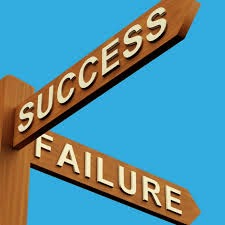
     We tend to perceive our actions as either failures or success. This is one reason why you may not see life as the learning opportunity it is. As soon as we see things as a failure, we take it personally (a worst state of mind). 
    The learning opportunity gets lost in the fog of self-doubt & bad feeling. However being turned down or rejected or refused doesn’t mean you are incapable or bad. It simply gives you feedback how to do it better next time.

    Infact, there is no such thing as failure, just feedback.


    Failure is a step toward your ultimate success.  It’s a lesson.  A challenge. A chance.


    Have a think about some of the things you would label as success & failures in your life. It doesn’t have to be a long list for you to realize that what you label as success or failure is personal to you; other people may label things differently. (Fortunately, I have a longer list of success even at this stage because I take my failure as the real feedback which let me learn how to it better next time & literally I learned a lot from those feedback). To achieve significant success in today's world, failure is not just a possibility. It's a requirement. We must see success and failure for what they truly are. They're not opposites, but instead opposite sides of the same coin.

    Whenever You Experience a ‘failure’, bring to mind your view of yourself being successful.

    Ø  How might this recent setback actually contribute to you being closer to where you wish to be?

    Ø  What did you learn that will take you nearer to your goal?

    This may require some imagination, as the ‘failure’ may seem like a terrible blow, taking you further away from your goal. However opportunity often comes from adversity,we just need to find it.

    NOW IT’S YOUR TURN

    Bad things happen. Most will contain an opportunity to learn, but it’s up to you to try & find it!
    Don’t just Panic- look at your new situation & consider everything carefully.

    Ask yourself if you’re holding onto a failure or disappointment in your life. Why are you hanging on to it?

    Seek support from other people who know you and who you trust to give you gentle feedback—especially if the “failure” feels fresh, even after many years.

    Decide how you will move forward and use what you’ve learned to create a new plan, to let the past go to make room in your life for your new dreams.
    Try & look towards each obstacle you face regardless of how unfair it seem – as a challenge from which you can learn something. Then let yourself learn, the more you do this , the more you gain control of your life, & the easier it becomes to tackle the next problem down the line.'


    We all have many roles in life: we are spouses, parents, children, siblings, colleagues, friends, mentors, neighbours, acquaintances… you get up, you’re a wife and a mother for an hour or two, you go to work and switch into a colleague and a boss, suddenly your mum calls and you get to be a child for a while, you meet your girlfriend for lunch and slip into friend mode, you go to do your hair after work – and there, you are a client.
    We almost never think about how many times we switch between roles in a day – it is almost non-stop activity, and we do it automatically, often moving from one to another without noticing.
    We are so used to adjusting our behaviour and expressing ourselves in so many different ways, it has become our second nature. And it is great we can do it so easily: without this ability, navigating the complex web of human relations would be a much more stressful endeavour.
    But, what we also seldom think about is – are we playing the right roles? Are we friends to our friends, and partners to our spouses? Are we parents to our children?
    I know it may sound confusing – how can we not be? – but many times in relationships we play roles which are not appropriate and healthy for that type of relationship. We become friends to our children, and parents to our parents, or therapists to our partners or friends.
    When that happens the relationship dynamic changes, and we lose the balance of the original roles: if we are too friendly to our kids, we lose authority we need to teach them things and guide them through life.
    When we swap roles with our parents we feel a great burden and responsibility that is not ours – while they become clingy and needy, and often frustrated if we can’t meet their needs.
    When we play therapists to our partners and friends we lose the equilibrium necessary for this type of relationship to thrive – we think we are giving it all and receiving very little, while they feel diminished, unappreciated and patronised.
    This balance shift occurs occasionally in all relationships – and it can be a good thing: every now and then we need our partners and friends to pick us up when we are down, same as we need to be friendly approachable and open with our kids, and help our aging parents with their needs – but when it becomes prevalent and overwhelming, it is rarely a good thing.
    In romantic relationships most commonly the roles change when one partner is emotionally, intellectually or in some other way dominant – the relationship turns into parent/child or therapist/patient one. Some people are happy in those type of relationships – and I am not saying you should not live this way, but I would not call it a healthy romantic relationship.
    The other common situation is when physical attraction fades and a couple morphs into platonic friends/flatmates (or brother and sister). This type of relationship can nevertheless be very harmonious and long-lasting, as long as neither of the parties is missing the sexual attraction and passion.
    But, again – it is not a healthy romantic union, and no matter how good it looks on the surface, it is very vulnerable: sooner or later one of you will fall crazy in love or just get fed up with this passionless arrangement.
    So if you feel your relationship (or your past relationships) is “not quite there”, but you are not sure what is wrong: it might because you are simply playing the wrong roles, and you need to go back and retrieve that fine balance of giving and receiving love, support and passion. Because that is what truly makes you – partners in love.

    LET ME HEAR YOUR THOUGHTS
    How about your roles? Do you feel in the right place in your relationships?
    Do you recognise a pattern of unbalanced roles in your previous relationships?
    Join the conversation below. Thank you.

    Finding out what you want in life and how to achieve it
    When I was a young man, I set a goal of being a millionaire by the time I was 30 years old—and I did. The problem was that I immediately lost all that money. I had flaws in my plan, flaws that taught me some valuable lessons.
    The lessons I learned from my experiences, successes, and failures allowed me to adjust my plan so that I could become financially free again by the time I was 47 years old.
    The point is that I never changed my plan. I simply adjusted the strategies I used to execute it. I improved on it more and more. Sticking to my plan helped me to achieve my goals.
    Often in life, when our plan doesn’t turn out, we abandon it all together. That is the wrong approach. Rather, a failed plan first requires an assessment of what went wrong. More often than not, the plan needs some adjustments, not to be abandoned.
    But before you can do any of this, you of course need to know your plan. So, how do you discover your own plan?
    1. Take your time
    Good plans rarely happen overnight. To find the right plan for you, you need to think long and hard about your life, what you want from it, and where you want to go. This can take days, weeks, and sometimes months. Take the time to discover and define what is really important for you in life.
    During this time, don’t talk with others until you know what you want. All too often, people either innocently or intentionally impose their ideals on others instead of respecting what others want for themselves. This is your time to define what you want for you.
    2. Find a coach
    Once you know what you want in life, find a coach that you can trust. This should be someone who has successfully done what you want to achieve. Ask them to provide their qualifications and interview several people. It will be an eye-opening experience for you.
    Your coach is there to guide you when you develop your plan and to ensure you stick to it. A coach isn’t there to coddle you; your coach is there to push you when you don’t want to be pushed and correct you when you need it.
    3. Set realistic goals
    Lots of people abandon a plan, not because the plan is bad, but because the goals were not realistic.
    Identify goals in a way that reflects what you want in life. Lots of people say, “I want to be a millionaire!” Don’t do that. That’s a cold, stale and lofty goal and one that is easily dismissed, especially when you’re having a hard time making your first $10,000.
    Set goals that are real to you: “I want to have enough passive income to cover my family’s expenses so I don’t have to worry about money and I can spend all my time with my children.” That’s better! Figure out how much passive income you need to achieve it and put a plan in place.
    If you make your goals more personal, you’ll have a better chance of sticking to your plan to achieve your ultimate goal.
    Don’t just sit on one goal and think that’s it. Start with small, realistic goals then improve or add to those goals as your financial education and experience increase. It’s best to learn how to walk before you run a marathon.
    Don’t get discouraged if you make mistakes. Having realistic goals doesn’t mean you’ll win one hundred percent of the time. Mistakes are part of the process of learning from and achieving your goals.
    4. Get a team
    Business and investing are team sports. As your plan evolves, you will need team members who can assist you in achieving your dreams. Members of your team might include a banker, accountant, lawyer, broker, bookkeeper, insurance agent, and/or a successful mentor.
    Each of these team members will need to be vetted by you. Don’t just take anyone onto your team; instead, find the right player for each position.
    When you have assembled your team, meet with them often. I held meetings with my team over lunch for many years. I learned a lot about business, investing, and the process of making money through these meetings.
    5. Mind your business
    Whatever your plan, always remember the words of rich dad, “Regardless of whether you work for someone else or for yourself, if you want to be rich, you’ve got to mind your own business.”
    Don’t be distracted by side projects. Yes, it may earn you an extra buck but it just ate up your time; time that could’ve gotten you closer to your goal. If it doesn’t move you in the right direction in relation to your plan, don’t do it.
    In minding your own business, you will be more in tune with the market’s feedback and you’ll be able to adjust your plan accordingly. Be diligent and keep going one step at a time. Do that and you’ll have a great chance at getting everything you want in life.


    The highly successful business woman and wife of Robert Kiyosaki, “Mrs. Kim Kiyosaki”shares her valuable advice for success in life and in the business world. Kim just jumped off her “Live Rich Dad Q&A Chat” to answer a handful of bugging questions from her followers and fans.Kim Kiyosaki started the Q&A with explaining the importance of finding communities of people with similar goals, passions and drive.Here is some more golden advice from the beautiful and remarkably successful, Kim Kiyosaki.

    Kim Kiyosaki’s Advice


    1. How to present a deal to a lender or investor?

    There is a rule that says “Money follows management.”
    And there are 3 things that you have to keep in mind when bringing an offer to the table.
    1. Project
    You have to have a great project, what is the investment?
    2. Partners
    Who are your partners, who are the people who are going to make this happen?
    3. Management
    Experiences, have they done this type of investment before?

    2. Staying  away from the debt trap?

    Good Debt: Buying a duplex rental property, putting down 15 – 25%, the money you borrow is good debt, after you pay off your loan you end up with cash-flow.
    Bad Debt: When you are using money out of your own pocket.
    Look for the investments with good cash flow. I would borrow money all day long if it will bring in good cash flow.
    The trick is to always have someone else pay for your debt.

    3. The most important habits that will change your life?

    Pay yourself first: With every $1 that comes in the household, take 30% off the top, 10% could go to your investment account, 10% to your savings and %10 to a charity.
    Pay yourself for your future first. Get into a habit of doing it with every single Dollar, Pound, Peso, Euro whatever it is.
    When I bought my very first property in 1989, part of the money that we had was from that investment account. It’s really tough in the beginning if you are struggling to get by but it will pay off in the long run.
    You have to make it a habit to take some percentage off the top.
    Today Robert and I practice the same habit except now it is 80% off the top.

    4. What you can do to think like a millionaire?

    One thing Robert and I do is have a plan before we have the money, we have investments prepared for where that money is going to go to. . Right now I am looking at Real Estate deals, we are constantly moving that money, especially when the banks are paying 0.3% interest.
    We just bought a liability a vacation house in carolina, first thing we asked how much is it going to cost every month. We found an investment, in the oil and gas industry and right now that investment is paying for our vacation house.
    Years ago Robert wanted a new Porsche, he asked me what I though and I said “sure, as long as we can find an asset to pay for it. S we found a mini storage that we leased out and it paid for the Porsche. We still have the Porsche and the mini storage was sold and invested it into an investment building we own today.
    If you don’t take action, actively looking, actively making mistakes then nothing is going to happen.
    We have to financially take care of ourselves. The government won’t take care of you, they are in it for themselves.

    5. How to deal with down days

    The purpose of a business is to solve problems.
    When things really go bad. When I really have a big problem. I have a mantra that I live by, the mantra is: “Something good is going to come out of this mess.” Robert and I have gone through some messes in the past and even recently. When we had to let go of one partner we got 2 fantastic partners which we have today.
    Donald Trump said something once, when he was 900 Million dollars down. In an interview someone asked Donald, “Don’t you worry at night?” Donald Trump said:
    Worry, who worries?, I take action on things that I can take on, and forget about the other things that I have no control over.

    6. How to deal with male counterparts In the business world

    I never had a problem dealing with Men. If you are smart with your money the world doesn’t care if you are male or female.
    The argument is that a lot of strong business women may come across rude or bitchy if they stand their ground in business, and in a mans case, they may be seen as smart. It’s almost like successful business women have a trade-off of being successful with being liked.
    Just because you have to lay down the law why do you think of it as rude or bitchy just because it is a woman?
    A lot of women say its tough in a mans world, that’s just an excuse, If you don’t like where you are then change your environment.
    When it comes to money, a lot of people say they don’t have the money, if you want to get started, you have to get creative to find the money. In that process, a lot of people don’t take action until they are pressed up against the wall, create your own wall, find the investment and make it happen.
    Steve Jobs once said:
    “You have to be passionate about what you do.”
    Passion is what will keep you going when you hit that wall. A lot of women wont take that first step because they haven’t found their reason why, their passion.

    We all compare. It’s human nature. We look at other people’s lives and notice the differences. We are younger, older, smarter, wiser, more or less attractive, healthier, richer or poorer. We have or don’t have something others do. There is so many ways and so many things we can compare.
    Our whole society is built on comparison. And competition. And even though it is a very natural thing to notice our differences – it’s the way we interpret them that counts. And most of the time, we do it the wrong way. We see other people as better, more successful and accomplished, more good-looking. And then we feel bad about ourselves. Insignificant. Unworthy.
    When it comes to love, dating and relationships – comparison is one of the biggest reasons for feeling miserable. When you are single you compare yourself with those who have a partner, which makes you feel like there’s something wrong with you. When you are in a relationship – but you’re not happy with it, you look at your single friends and wish you were in their place. Or you see a seemingly happy couple and you wonder why you can’t have what they have.
    The way we compare is usually harming and unproductive, and I am certain that if we stopped comparing and competing so much, we’d be much happier in our lives, right here and now. But I am also aware it’s almost impossible to stop doing it. So the only way to feel better about ourselves is to start comparing smarter.
    I used to compare myself a lot with others when I was a teenager and young adult. Some of my friends were more attractive and slimmer than me. Some had nicer parents (or so I thought). Some had more money and more beautiful clothes. Some did really cool things, traveled the world, had interesting jobs and hobbies. I wished I was like them. It mostly made me bitter, unhappy and envious.
    As I grew older, I gradually realised it’s not so bad to be me after all. But I also found out that the things I had or did, and the way I looked, didn’t make me very happy. And I began to see that what those other people had didn’t really make them very happy either. We all had something different, but nobody was satisfied with their particular package.
    It’s because most of us don’t know how to happy where we are, and we always think that we need to get something else or more, and then everything will fall into place. And we only see the surface of other people’s lives – and that’s just the tip of the iceberg. The real life troubles and struggles are hidden under the water.
    I still compare today, but I do it in a way that makes me much happier in my own skin – and much better at comparing. Here are some of my tips for better comparing:

    1 – COMPARE TO GET INSPIRED, NOT DISCOURAGED
    Comparison should serve to give you ideas and inspiration to improve your life. If you see someone who is happier and more accomplished than you, ask them how they do it. Study and observe them to see what is it they do, feel or think. What makes them feel good? How did they achieve that?
    Comparison should only serve to help you feel better, not worse. And it should inspire action – if you see something you like and want, you should look for ways to get it yourself.
    Of course, this doesn’t always work – if you want things like a completely different body, a marriage proposal from a prince or your own island, for example – but those are not things that will make you truly happy either. The ones that truly matter are always within your reach. Always.

    2 – COMPARE YOURSELF WITH YOURSELF
    The best and most useful use of comparison is when you compare your today self with your old self. Thinking about all the silly and immature things you used to do when you were younger should make you feel good. To see how far you’ve come and how much you’ve grown as a person can be truly empowering.
    However, try not to have regrets for the things you did or didn’t do when you were younger. It’s all part of your life path, and you would have done better if you had known better. So forgive yourself and look on the positive side – be grateful and proud of yourself that you feel much better and wiser now.
    If you feel you haven’t changed or improved when you look back, or you feel your younger self enjoyed and loved life more – that is a sign that should motivate you to rethink your life now, and prompt you to action.
    Don’t dwell on the lost opportunities of your past, there is plenty of them right now, right here! And those are the ones you can actually do something about. Looking back with regret doesn’t do anything, except make you feel worse.

    3 – DON’T JUST COMPARE WITH THOSE WHO ARE BETTER
    And when you do compare with others – be realistic. Don’t just compare yourself with people who are better than you in some way. Look at the whole population, or your whole group of friends, colleagues and acquaintances. Try to see where you are relative to everyone – not just the high achievers.
    That will give you a much more grounded and positive perspective – you are worse off in some ways, but you’re also better and more advanced in others. And in return, instead of always feeling less successful – you’ll get much more personal satisfaction out of the comparison.
    If there is something that you truly want – you can look up to people who did it already, but also look around you to see how many are there who are struggling just like you. Give yourself some compassion, just like you’d give it to someone else in your situation. It’s very toxic to just compare to the best, or the ones who have something more than we do.
    It takes away our personal power. The power to change, improve, make things better. But most of all – the power of making you feel good just as you are, right here, right now. And there is so much to you already that can make you feel good – all you need to do is just take notice of it.

    YOUR THOUGHTS…?
    How do you usually compare yourself to others? Does it make you feel good or bad?
    Do you sometimes look back on yourself and think about how you’ve changed? How does that make you feel?
    Share it in the comments below! Thanks.

    Probably the number one reason people don’t put themselves out there more to find potential partners is fear of rejection. You want a date, you want a relationship – but you can’t stand the thought of getting hurt in the process of finding them. Your desire for love and connection fades as bad experiences and insecurity take over – and choosing to stay home alone, instead of going out into uncertain and scary dating territory, becomes an easier and easier decision.
    People who do this often end up being alone for very long periods – years and decades. They wonder why they never meet anyone, but they simply don’t understand they are the ones sabotaging themselves. There is no gain without pain – and dating is no different in this than any other human activity. You simply can’t shield yourself from every possible hurt because you will be automatically shielding yourself from truly living too. And connection. And love. And all those good things you are craving for.
    You cannot succeed in anything if you don’t try. And not just try once or twice and then give up. You have to try until you get what you want. That’s the only magical formula that exists in life, in any human achievement. If you give up, that’s it. You can rely on luck to get you what you want, but that leaves you with nothing but hope. Ask yourself: is passive longing really better than active striving?
    If we didn’t fear the outcome of our actions we would all be much more successful in life. So why do we fear so much?
    Fear of rejection is essentially fear of disapproval. We all want to be liked and loved, that is one of the most basic human needs. But we can never be liked and loved by everyone we meet. Same as we don’t ever like everyone we meet, right?

    GET TO KNOW YOUR FEAR
    In order to beat this fear you need to understand it. You need to get to know it, and in a broader sense – get to know yourself. You can do this by examining what exactly you’re afraid of here, and what would really happen if what you fear comes true. Most of our fears are very irrational, and that is because we never attempt to rationally think about them.
    So ask yourself: what’s the worst that can happen if I get rejected? Why do I think I have to be liked by everyone? Why do I think I have to be liked by majority? What if I am liked by only a handful of people I meet, is that really bad? What are the real consequences of someone saying ‘no’ to me?
    You have to always keep in mind that you only need ONE partner to be in a happy relationship. So if out of 100 people 99 rejects you or you reject them, that is perfectly fine. Because you’ve found your one! And that’s all that matters, really.
    But in order to find that one, you might need to go through 10 or 20 or even 100 dates. Is it worth the effort for you? If it isn’t, then maybe you are not that keen to find someone after all.

    REJECTION IS HUMAN, WE ALL REJECT – YOU INCLUDED
    The pain you feel when you are rejected by someone is the same pain everyone else on the planet feels. We all get rejected. Even the most charming, attractive and beautiful ones. So don’t think about yourself as the only victim of this phenomenon. Look at it as a normal, natural fact of life. Rejection means: I don’t think we are a match. What it doesn’t mean is: you are not good enough for me.
    But the problem is, we usually think the latter. We take it too personally. We think that rejection means there is something wrong with us. And that is what truly hurts – the thought that we are unattractive, unworthy, damaged goods. But if you reverse the tables – you will see that you reject others too.
    And you do it from the same reasons they do – you simply don’t see a great fit.

    FEAR GOES AWAY BY DOING WHAT YOU’RE AFRAID OF
    The best way to beat any fear is to face it. Doing the things that scare you makes your fear go away. If you go out on dates or into social situations that scare you, you will gradually get much better at them. You will see other people are just like you, and they are all looking for the same thing – to overcome their loneliness and connect with others.
    The more you socialise and meet people, the better you will become at spotting what you truly like and need. You’ll get to know yourself. You’ll get to know others. You might even begin to like it, instead of dreading it.

    AND LAST, BUT NOT LEAST… LOVE YOURSELF
    The only way to completely take away the pain and anxiety of rejection is to truly love, appreciate and respect yourself. When you do that, you will know we are all equally worthy, and you will feel your value and quality so strongly that you’ll never get offended if someone says ‘no’ to you.
    In fact, you will be glad they did it, because you’ll know that whoever doesn’t like you, clearly isn’t a good match for you. You’d find that out yourself sooner or later, but by rejecting you from the start, they are actually saving you time and effort.
    Whenever you get rejected, think about it as being one step closer to your goal.
    The people we admire for their great achievements had to fail many times before they succeeded, only we don’t know about that part because we only see where they are now. They had different paths to success, and yours will certainly different too. But the one thing they all share is: they kept trying until they succeeded.

    TELL ME WHAT YOU THINK
    I know rejection is a big and common topic and I’d love to hear what you think.
    I am sure you had some experience with it, so don’t be shy – share it with me and the lovely supportive community that reads and comments here. Thank you!

    Kindly Share Your Valuable feedback and don't forget to use social bookmarking widgets to spread the info!!
    -

    Author Name

    {picture#https://plus.google.com/u/0/+MahamShahidFarooq/about?pid=6074188247542010530&oid=101689194546144986205} {facebook#https://www.facebook.com/MahamShahid7865} {twitter#https://twitter.com/Mahamshahid7865} {google#https://plus.google.com/+MahamShahidFarooq/posts} {pinterest#https://www.pinterest.com/mahamshahid7865/} {Instagram#https://instagram.com/mahamshahid7865/}

    Contact Form

    Name

    Email *

    Message *

    Powered by Blogger.